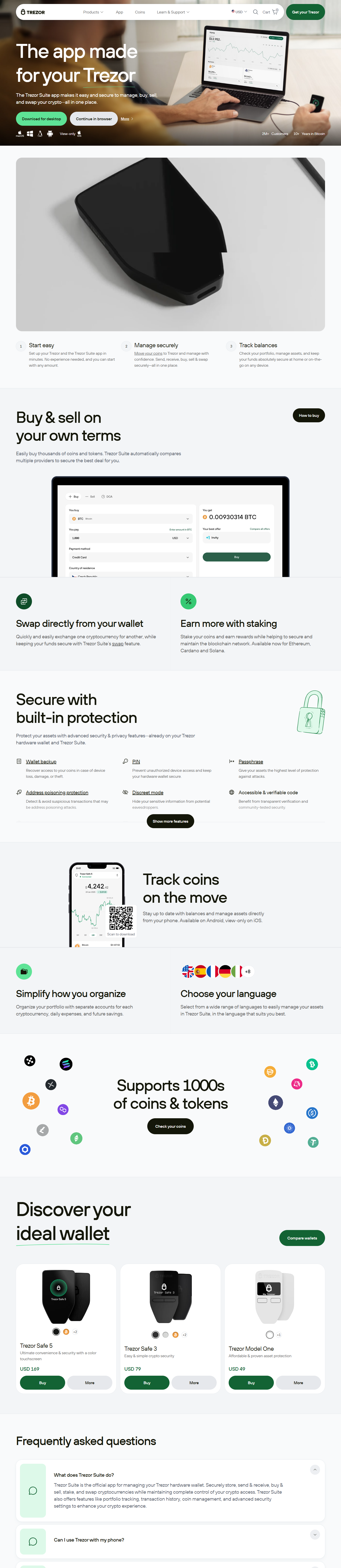
Trezor Login Comprehensive Guide
Introduction to Trezor Login
Trezor Login serves as the gateway to managing your cryptocurrency assets securely through Trezor’s ecosystem. It is an intuitive interface designed to work seamlessly with Trezor hardware wallets, ensuring that users can access, manage, and protect their digital assets with ease. Whether you are a beginner or an experienced crypto enthusiast, Trezor Login provides a user-friendly platform that prioritizes security and control. By connecting your Trezor device to the Trezor Suite or supported third-party applications, Trezor Login allows you to interact with your cryptocurrencies while keeping your private keys offline, safeguarding them from online threats. This section explores the core purpose of Trezor Login, its role in the cryptocurrency space, and how it empowers users to take charge of their financial future with confidence.
The Trezor brand has established itself as a leader in the hardware wallet industry, known for its commitment to open-source development and robust security protocols. Trezor Login is not just a tool but a cornerstone of the Trezor experience, enabling users to securely access their funds, manage multiple cryptocurrencies, and explore advanced features like passphrase-protected hidden wallets. By focusing on user empowerment and security, Trezor Login ensures that your crypto journey is both safe and accessible, making it an essential component for anyone looking to protect their digital wealth.
Understanding Hardware Wallets
Hardware wallets are physical devices designed to store cryptocurrency private keys offline, offering a significant security advantage over software wallets that are constantly connected to the internet. Trezor Login is the interface that bridges the gap between your Trezor hardware wallet and the digital world, allowing you to interact with your assets without compromising their safety. Unlike hot wallets, which are vulnerable to hacking and malware, hardware wallets like Trezor keep your private keys in a secure environment, only accessible when you physically connect the device and authenticate via Trezor Login.
The Trezor ecosystem, including models like Trezor Safe 3, Trezor Safe 5, and Trezor Model T, integrates seamlessly with Trezor Login to provide a cohesive user experience. By using Trezor Login, you can perform transactions, check balances, and manage accounts while ensuring that your private keys never leave the device. This section delves into the mechanics of hardware wallets, their importance in the crypto ecosystem, and how Trezor Login enhances their functionality by offering a secure and intuitive interface for users worldwide.
Why Choose Trezor Login for Crypto Security
Trezor Login stands out in the crowded cryptocurrency security market due to its emphasis on user control, transparency, and cutting-edge security features. The platform is designed to work with Trezor’s hardware wallets, which utilize an NDA-free EAL 6+ Secure Element, ensuring that your private keys remain protected against both online and offline threats. Trezor Login’s offline storage mechanism means that your sensitive data is never exposed to the internet, significantly reducing the risk of hacking or unauthorized access.
Additionally, Trezor Login supports advanced security measures such as PIN protection and passphrase-enabled hidden wallets, allowing users to create multiple layers of security for their assets. The open-source nature of Trezor’s firmware and software further enhances trust, as the code is publicly auditable, ensuring no hidden vulnerabilities. This section highlights why Trezor Login is the preferred choice for crypto enthusiasts who prioritize security, ease of use, and flexibility, positioning it as a trusted solution for safeguarding digital assets in an increasingly complex digital landscape.
Setting Up Your Trezor Device
Before you can use Trezor Login, you must properly set up your Trezor hardware wallet. This process involves initializing the device, creating a wallet backup, and configuring security settings. When you first connect your Trezor device to your computer or mobile device, Trezor Suite, the official software companion, guides you through the setup process. You’ll be prompted to install the latest firmware, create a new wallet, and generate a recovery seed, which is a critical component for restoring access to your funds if your device is lost or damaged.
Trezor Login integrates with this setup by requiring you to authenticate your device each time you access your wallet. The recovery seed, typically a 20-word phrase for newer Trezor models like the Safe 3 and Safe 5, is based on the SLIP39 standard, offering enhanced security and clarity compared to the older 12- or 24-word BIP39 seeds. This section provides a step-by-step guide to setting up your Trezor device, ensuring that you can seamlessly transition to using Trezor Login to manage your cryptocurrencies with confidence.
Accessing Trezor Login
Accessing Trezor Login is a straightforward process that begins with connecting your Trezor hardware wallet to your computer or mobile device via USB or Bluetooth (for supported models). Once connected, you can use Trezor Suite, a desktop or mobile application, or Trezor Connect, a platform for third-party integrations, to access the Trezor Login interface. You’ll need to enter your PIN on the device itself, ensuring that even if your computer is compromised, your PIN remains secure.
Trezor Login supports a wide range of cryptocurrencies, allowing you to manage assets like Bitcoin, Ethereum, and various altcoins from a single interface. The platform’s design prioritizes simplicity, with clear navigation and intuitive controls, making it accessible to users of all experience levels. This section explores the different ways to access Trezor Login, including through Trezor Suite, web-based interfaces, and third-party applications, and provides tips for ensuring a smooth and secure login experience every time.
Managing Your Cryptocurrency with Trezor Login
Once logged in, Trezor Login offers a comprehensive suite of tools for managing your cryptocurrency portfolio. You can view your account balances, send and receive transactions, and organize your wallets and accounts using features like labeling. Trezor Suite, the primary interface for Trezor Login, allows you to create multiple accounts for different cryptocurrencies, track transaction histories, and export data for tax purposes or record-keeping.
The platform also supports advanced features like coin control, which lets you choose specific inputs for transactions to optimize privacy and fees. Trezor Login’s integration with third-party services, such as exchanges and staking platforms, enables you to buy, sell, or stake cryptocurrencies directly from the interface. This section covers the various functionalities available through Trezor Login, offering practical advice on how to manage your digital assets efficiently while maintaining the highest standards of security.
Security Features of Trezor Login
Security is at the heart of Trezor Login, making it one of the most trusted platforms for cryptocurrency management. The offline storage of private keys ensures that your funds are protected from online threats like phishing attacks and malware. Trezor Login also incorporates advanced security features such as passphrase protection, which allows you to create hidden wallets that require an additional secret phrase to access, adding an extra layer of defense.
The Trezor ecosystem employs a robust checksum mechanism in its 20-word Single-share Backup, ensuring that any errors in your recovery seed are caught during the setup process. Additionally, Trezor Login supports two-factor authentication (2FA) through Universal 2nd Factor (U2F), allowing you to use your Trezor device as a security key for other online services. This section dives into the technical aspects of Trezor Login’s security features, explaining how they work together to provide unparalleled protection for your digital assets.
Advanced Features and Customization
Trezor Login offers a range of advanced features for users who want to tailor their crypto experience. For instance, the Multi-share Backup option allows you to split your recovery seed into multiple shares, which can be stored in different locations for added security. This feature, based on the SLIP39 standard, is particularly useful for users who want to distribute their backup across trusted parties or locations.
Additionally, Trezor Login supports customization options like default wallet loading, which lets you choose whether to load a standard wallet or a passphrase-protected wallet upon startup. The labeling feature in Trezor Suite allows you to rename wallets and accounts, making it easier to track multiple portfolios. This section explores these advanced features, providing insights into how they can be used to enhance your Trezor Login experience and cater to specific use cases, such as institutional or high-net-worth crypto management.
Troubleshooting Common Trezor Login Issues
While Trezor Login is designed to be user-friendly, users may occasionally encounter issues such as connection problems, firmware update errors, or difficulties recovering a wallet. Common issues include the device not being recognized by Trezor Suite, incorrect PIN entries locking the device, or confusion about the recovery seed format (e.g., 20-word SLIP39 vs. 24-word BIP39). Trezor’s support resources, accessible via trezor.io, provide detailed guides for resolving these issues, and the Trezor community forums offer peer-to-peer assistance.
This section offers practical solutions to common Trezor Login problems, including step-by-step instructions for resetting your device, updating firmware, and recovering your wallet. It also emphasizes the importance of never sharing your recovery seed and how to recognize phishing attempts, ensuring that users can troubleshoot issues without compromising their security.
Best Practices for Using Trezor Login
To maximize the security and efficiency of Trezor Login, users should follow best practices tailored to cryptocurrency management. Always verify the authenticity of your Trezor device upon receipt, checking for tamper-evident packaging and security seals. Store your recovery seed in a secure, offline location, ideally using a durable solution like the Trezor Keep Metal, which protects against fire, water, and physical damage. Regularly update your Trezor firmware to ensure you have the latest security patches and features.
When using Trezor Login, avoid connecting your device to untrusted computers or networks, and always double-check transaction details on the device’s screen before confirming. This section provides a comprehensive list of best practices, drawing from Trezor’s official recommendations and community insights, to help users maintain the highest level of security while enjoying the full capabilities of Trezor Login.
Community and Support for Trezor Login Users
Trezor Login users benefit from a vibrant community and robust support ecosystem. The Trezor Knowledge Base (trezor.io/support) offers detailed guides on everything from setup to advanced features, while the Trezor Forum (forum.trezor.io) provides a platform for users to share experiences and seek advice. Social media channels and platforms like Reddit also host active Trezor communities where users discuss tips, troubleshoot issues, and stay updated on the latest developments.
Trezor’s customer support team is accessible via the Troubleshooter tool, ensuring that users can resolve issues quickly and securely. This section highlights the resources available to Trezor Login users, emphasizing the importance of community engagement and how it contributes to the overall Trezor experience, fostering trust and collaboration among crypto enthusiasts.
Future of Trezor Login and Cryptocurrency Security
As the cryptocurrency landscape evolves, Trezor Login continues to adapt, integrating new technologies and features to meet user needs. The shift to SLIP39-based 20-word backups and the introduction of advanced devices like Trezor Safe 5 demonstrate Trezor’s commitment to innovation. Future updates to Trezor Login may include enhanced integrations with decentralized finance (DeFi) platforms, improved user interfaces, and expanded support for emerging cryptocurrencies.
The growing adoption of Trezor Login reflects its role as a trusted solution in the crypto space, with a focus on user empowerment and security. This section explores the potential future developments for Trezor Login, including its role in shaping the broader cryptocurrency security landscape, and how Trezor continues to lead the industry through open-source innovation and user-centric design.
Disclaimer
The information provided in this guide is for educational purposes only and does not constitute financial or investment advice. Cryptocurrency investments carry inherent risks, including the potential loss of funds due to market volatility, hacking, or user error. Always verify the authenticity of your Trezor device and never share your recovery seed or PIN with anyone. Trezor Login and its associated products are designed to enhance security, but users are responsible for following best practices to protect their assets. Consult with a qualified financial advisor before making any investment decisions. Trezor is not liable for any losses or damages resulting from the use of its products or services.
Made in Typedream